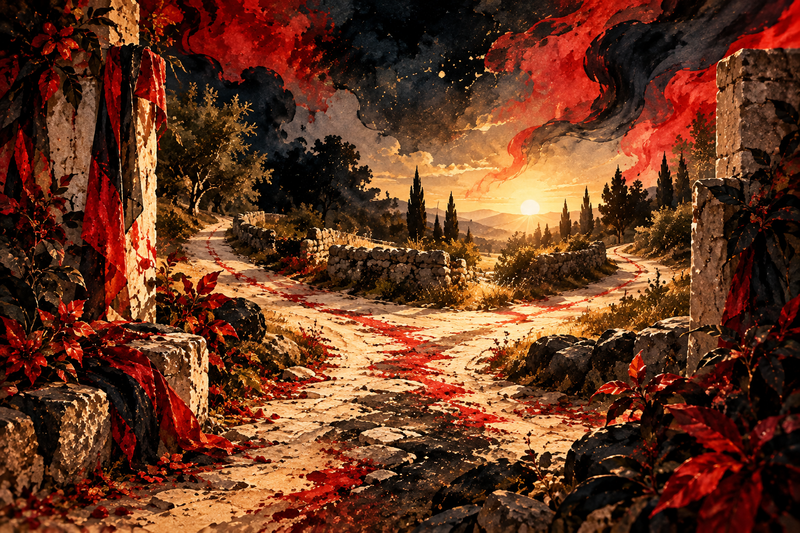
There are moments in life when we find ourselves standing at a crossroads.
A change of job, a relationship we’re unsure whether to continue, a project that never quite gets off the ground… These are the moments when we feel we need a sign, a nudge or simply someone to help us see the way clearly.
In Afro-Cuban tradition there is a figure who watches over precisely these crossings: Eleggua, the master of the roads. We’ll tell you who he is, what he represents and how you can approach him with respect to ask him to open your way.
Who is Eleggua
Eleggua (also written Elegguá or Eleguá) is one of the most beloved orishas of the Yoruba religion, which reached Cuba with the African peoples and became what we know today as Santería, or Regla de Ocha. He is one of the Seven African Powers, the most revered group of orishas in this tradition.
He is the lord of crossroads, paths, decisions and opportunities. Nothing begins without him: that is why he is the first to be greeted and honoured in any ceremony, and it is said that he is the one who opens the door so that requests can reach the other orishas.
How he is depicted: a mischievous child dressed in red and black
Eleggua is usually depicted as a child, although he sometimes appears as an old man or a young man. This duality is no coincidence: he is both the beginning and the end, innocence and wisdom.
His nature is playful and mischievous. He can bring us joy, prosperity and good opportunities… or put us to the test, depending on how we treat him. That is why people speak to him with affection, respect and sincerity.
His colours are red and black, which he wears on his cap and clothing. They symbolise the opposites that coexist in life: life and death, beginning and ending, what opens and what closes.
Eleggua at a glance: colours, number, day and saint
These are the traits by which tradition recognises Eleggua:
| Trait | Eleggua |
|---|---|
| Colours | Red and black |
| Number | 3, and also 21, the number of his roads |
| Day | Monday |
| Greeting | ‘Laroyé!’ |
| Place | Behind the front door |
| Attributes | The garabato (a hooked wooden staff), keys and cowrie shells |
| Identified with | The Holy Child of Atocha and Saint Anthony of Padua, whose feast day is 13 June |
| Offerings | Sweets, sweet treats, coconut, toasted corn and toys |
If you already have an Eleggua or would like to care for him, we explain how to do it every Monday in our guide to the benefits of having Eleggua at home and how to care for him.
Eleggua and Eshu: are they the same?
It’s one of the most common questions. In the original Yoruba tradition, Eleggua and Eshu are two names for the same force. In Cuban Santería, however, they are told apart: Eleggua is the more domestic, calmer side, the child who lives behind the door and protects the home, while Eshu brings together the more streetwise, swift and unpredictable manifestations.
That’s why people say that Eleggua ‘lives at home’ and Eshu ‘works in the street’. In practice, santeros hand over Eleggua and, in the Ifá tradition, babalawos hand over Eshu.
The roads of Eleggua
Eleggua is not a single figure: tradition speaks of his roads, also known as avatars or manifestations, of which there are traditionally 21. Each one has its own character, likes and rules. Some of the best-known names are Laroyé, Alawana, Afrá, Baralayiki, Akefun and Osokere.
Only a santero or a babalawo can say which road of Eleggua walks with each person, usually in a consultation with the cowrie shells or with Ifá.
Why people ask Eleggua for help
Eleggua is a mediator between the divine and the human. Many people bring him gifts and dedicate rituals to him, asking him to guide them, protect them or intervene in important matters, whether personal, work or business-related.
People turn to him above all to:
- Open the way when everything seems stuck.
- Close chapters that no longer serve us and leave behind what weighs us down.
- Make decisions with clarity when we stand at a crossroads.
- Overcome obstacles and difficult situations that keep repeating themselves.
How to ask Eleggua to open your way
You don’t need an elaborate ritual to approach Eleggua. What matters is doing it with intention, respect and gratitude:
- Choose your moment. Monday is traditionally his day, and it’s also a good start to the week for opening the way.
- Prepare your space. Find a quiet corner, cleanse it with incense and, if you like, leave a small offering: a few sweets, which his childlike side loves so much.
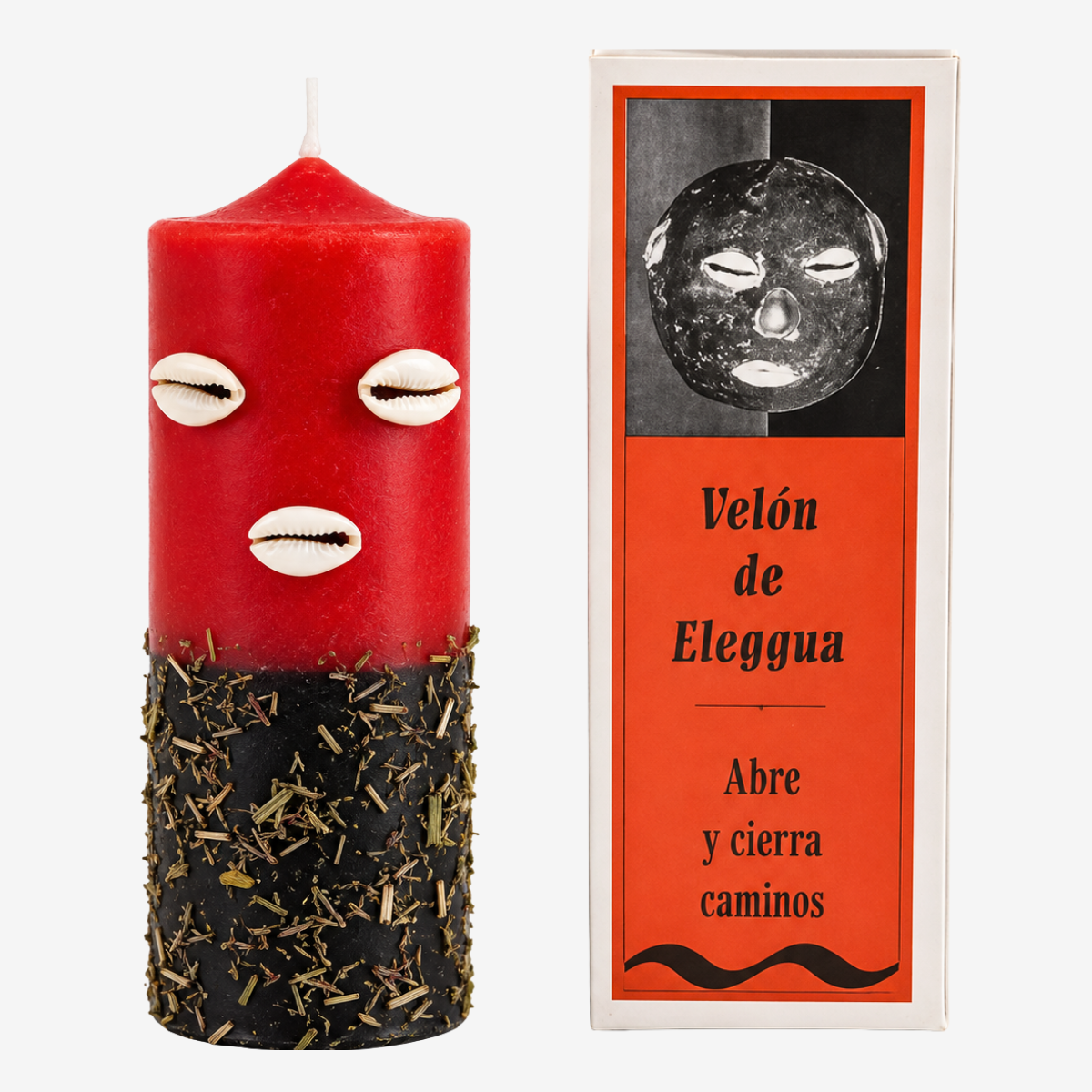
- Light your candle. The Prepared Eleggua Pillar Candle, in red and black, is made for opening and closing chapters. The Eleggua Prayer Candle includes a prayer for you to address him.
- Speak to him sincerely. Tell him which path you need to open or which chapter you wish to close. Say his prayer and picture that new path clear before you.
- Give thanks. When you feel your request moving forward, don’t forget to thank him. With Eleggua, gratitude is part of the bond.

Prayer to Eleggua to open your roads
Eleggua, master of the roads and the crossroads,
you who hold the keys to what was, what is and what will be:
open the roads that are closed to me today.
Clear the obstacles from my path, set opportunities before me
and give me the clarity to choose well.
I greet you first and I give you thanks. Laroyé!
And if you’d like to care for him regularly, every Monday, we explain it step by step in how to care for Eleggua at home.
To clear the way
If you feel your path is especially blocked, you can strengthen your request with the Double-Charge Road Opener Candle, violet in colour and prepared with a ritualised essence. Its double charge helps remove the obstacles holding you back and draw in new opportunities.

Frequently asked questions about Eleggua
Who is Eleggua?
He is the orisha of roads, crossroads and opportunities in Santería, or Regla de Ocha. He is the messenger between people and the orishas, which is why he is always greeted first.
What are Eleggua’s colours?
Red and black, which symbolise the opposites that coexist in life: beginnings and endings, what opens and what closes.
Which day belongs to Eleggua?
Monday. His feast is also associated with 13 June, the feast day of Saint Anthony of Padua, one of the saints he is identified with.
Which saint is Eleggua identified with?
With the Holy Child of Atocha and with Saint Anthony of Padua.
Are Eleggua and Eshu the same?
In the Yoruba tradition they are two names for the same force. In Cuban Santería they are told apart: Eleggua is the domestic, protective side, while Eshu brings together the more streetwise and unpredictable manifestations.
How many roads does Eleggua have?
Tradition speaks of 21 roads, each with its own character, likes and rules. Only a santero or a babalawo can say which road walks with each person.
Every path begins with a first step
Eleggua reminds us that life is made of crossroads, and that at each one we have the chance to choose. Sometimes it’s time to open a new door; at other times, to lovingly close the one that has already served its purpose.
Whatever your crossroads, may you find the clarity to decide and the strength to take the first step.
May Eleggua open your way and walk beside you in every decision. 🕯️



Our customers trust us
Opinions of our clients
Receive our news