Saint Benedict: what he protects against, his medal, prayer and how to cleanse it
If you have ever been given a Saint Benedict medal or seen his candle burning in someone’s home, you already know he is one of the best-loved protector saints. But what exactly does he protect against? What do the mysterious letters on his medal mean? And how do you cleanse it?
In this guide we cover it all: who Saint Benedict was, what he protects against, the meaning of every letter on his medal, his prayer and how to cleanse and activate the medal and the candle, step by step.
Quick answer: Saint Benedict protects against evil in all its forms: negative energy, envy and the evil eye, curses, temptation and poison. He is also the patron of a happy death and the patron saint of Europe. His protection is invoked above all with the Saint Benedict medal, which bears a Latin exorcism prayer, and with his candle.
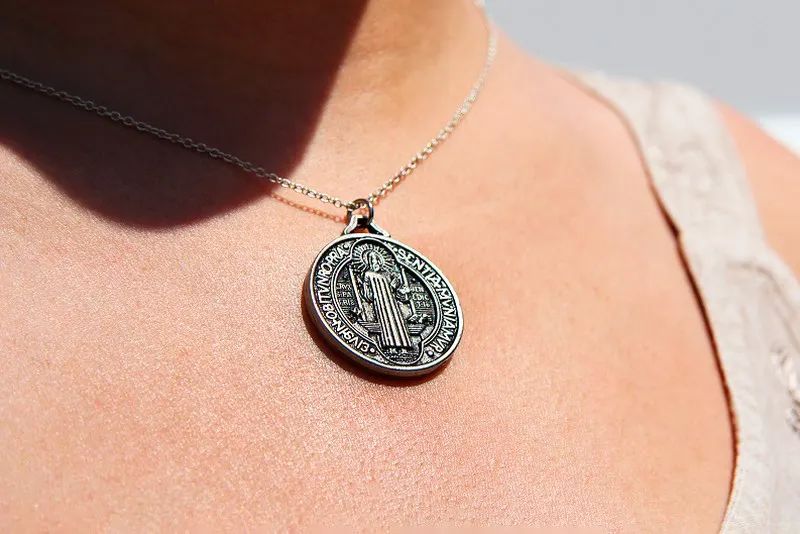
Decode the Saint Benedict medal
Every symbol on the Saint Benedict medal hides a protection. Tap the golden details on the front, turn it over and decode the back: at the end you will find the full prayer and the ritual to activate your medal.
The Saint Benedict medal
Decode his medal
Tap each symbol and discover what it protects you from. Once you have uncovered them all, you’ll get the full prayer and how to activate your medal.
Tap a gold symbol on the medal
Medal decoded
Now you know all its secrets
The Saint Benedict prayer
Crux sacra sit mihi lux, non draco sit mihi dux. Vade retro, Satana, numquam suade mihi vana. Sunt mala quae libas, ipse venena bibas.
May the Holy Cross be my light; let not the dragon be my guide. Begone, Satan! Never tempt me with vanities. What you offer me is evil: drink your own poison.
Activate your medal in 4 steps
Carry his medal with you
For your protection ritual
What does Saint Benedict protect against?
Above all, Saint Benedict is the saint who keeps evil away. These are the protections he is most often invoked for:
- Against negative energy and evil spirits. He is the saint of “Vade retro, Satana”, the words that command evil to leave.
- Against envy and the evil eye. A jealous priest sent him poisoned bread and a raven carried it away: what others wish on you cannot reach you.
- Against curses and ill-intentioned spells. His medal says it plainly: “What you offer me is evil; drink your own poison.”
- Against poison and contagion. When monks tried to poison him, the cup shattered as he blessed it. That is why people traditionally asked him for protection against poison and contagious illness.
- Against temptation and bad decisions. “Let not the dragon be my guide”: may evil never set your path.
- At the hour of death. He died peacefully, standing and praying, which is why he is the patron of a happy death.
- For your home, your car and your business. Many people place his medal behind the front door, in the car or by the till.
Saint Benedict has also been the patron saint of Europe since 1964, when Pope Paul VI proclaimed him so, and he is the patron of monks, farmers and schoolchildren.
Who was Saint Benedict?
Benedict of Nursia, also known as Saint Benedict the Abbot, was born around 480 in Nursia (today’s Norcia, in Italy). He studied in Rome, but disillusioned by the city he withdrew to live as a hermit in a cave at Subiaco for three years.
His reputation for holiness drew many followers. Around 529 he founded the monastery of Monte Cassino, where he wrote his famous Rule, summed up in the motto “ora et labora” (pray and work). That Rule still guides thousands of Benedictine monks around the world today.
His life is full of battles against evil. The monks of Vicovaro, resentful of his discipline, tried to poison him with a cup of wine that shattered when he blessed it. Later, the priest Florentius sent him poisoned bread, which Benedict asked a raven to carry far away.
He died on 21 March 547 at Monte Cassino, standing in the chapel and supported by his monks. His feast day is 11 July. His twin sister, Saint Scholastica, is also a saint.
The Saint Benedict medal and the meaning of its letters
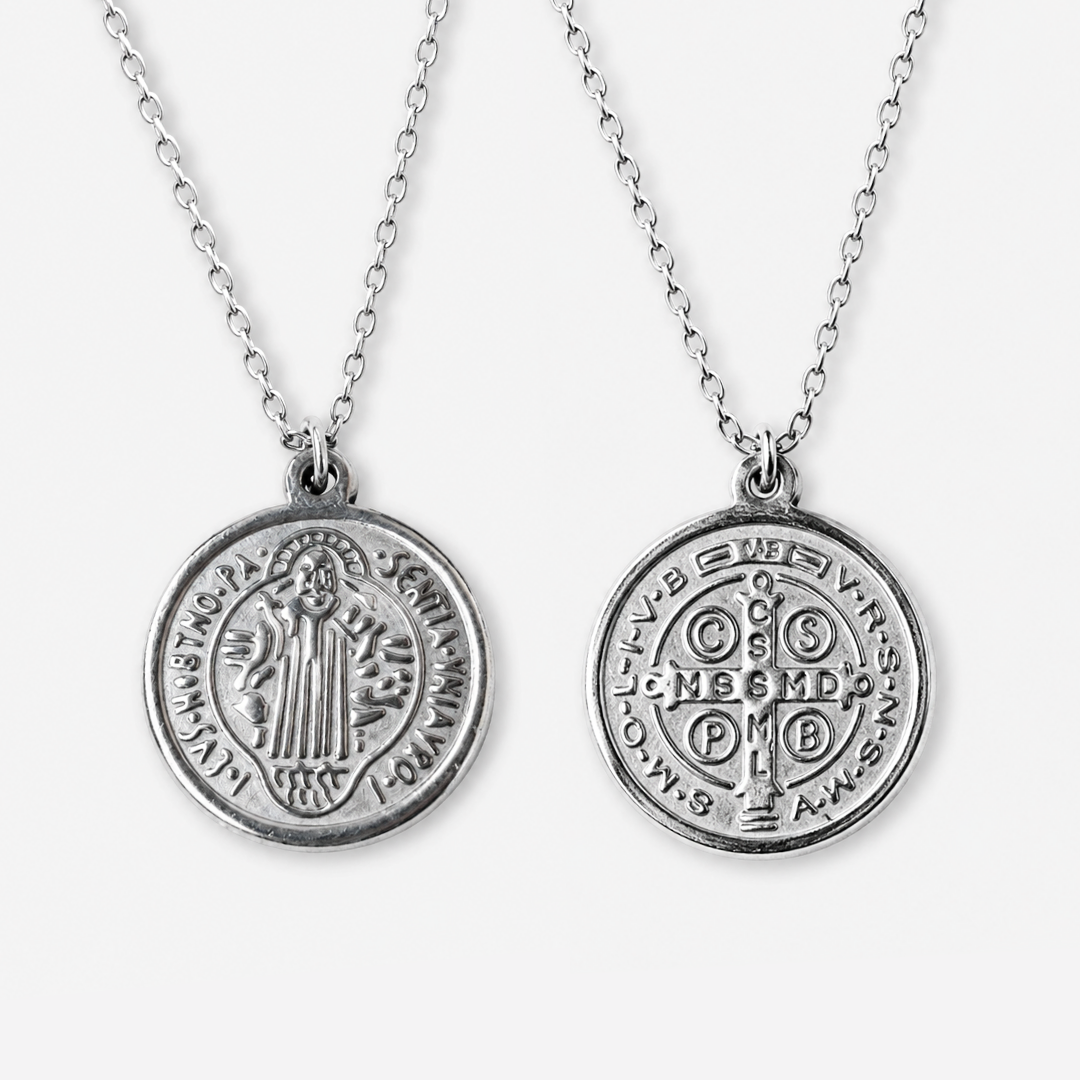
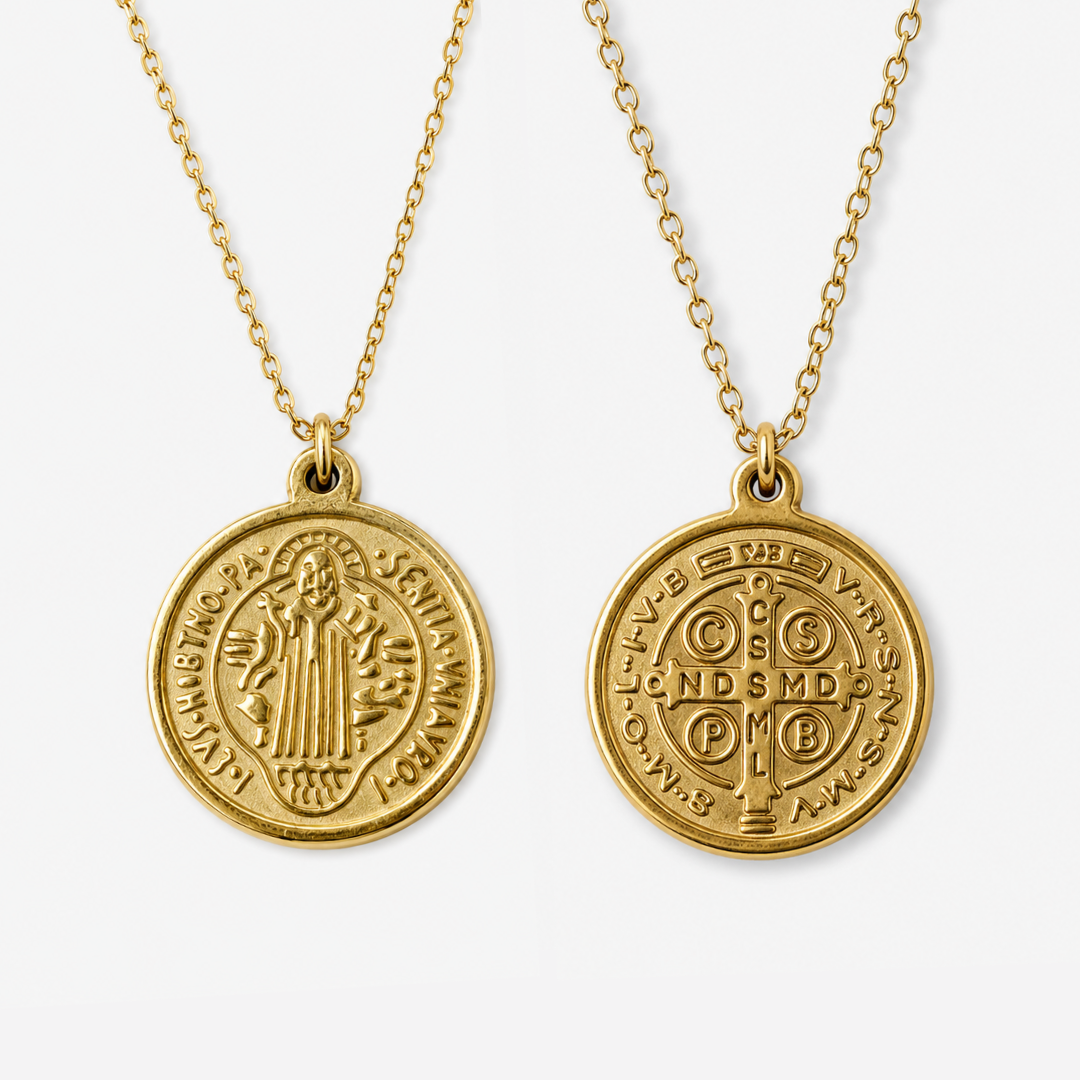
The Saint Benedict medal is one of the oldest and best-known protection amulets. The front shows the saint holding the cross in one hand and his Rule in the other, with the broken cup and the raven carrying the bread. The back shows the cross surrounded by letters: the initials of a Latin exorcism prayer.
For centuries nobody knew what the letters meant, until in 1647 a manuscript from 1415 explaining them was found at Metten Abbey in Bavaria. In 1742 Pope Benedict XIV approved the medal, and in 1880 the so-called Jubilee medal was struck at Monte Cassino; it is the design most widely used today.
| Letters | In Latin | Meaning |
|---|---|---|
| C · S · P · B | Crux Sancti Patris Benedicti | Cross of the Holy Father Benedict |
| C · S · S · M · L | Crux Sacra Sit Mihi Lux | May the Holy Cross be my light |
| N · D · S · M · D | Non Draco Sit Mihi Dux | Let not the dragon be my guide |
| V · R · S | Vade Retro Satana | Begone, Satan! |
| N · S · M · V | Numquam Suade Mihi Vana | Never tempt me with vanities |
| S · M · Q · L | Sunt Mala Quae Libas | What you offer me is evil |
| I · V · B | Ipse Venena Bibas | Drink your own poison |
| PAX | Pax | Peace, the Benedictine motto |
Want to go deeper into how to use it? Read Saint Benedict Medal: Your Shield of Protection.
The Saint Benedict prayer
This is the prayer engraved on the medal, the most powerful one for keeping evil away:
Crux sacra sit mihi lux, non draco sit mihi dux. Vade retro, Satana, numquam suade mihi vana. Sunt mala quae libas, ipse venena bibas.
May the Holy Cross be my light; let not the dragon be my guide. Begone, Satan! Never tempt me with vanities. What you offer me is evil: drink your own poison.
And here is a simple protection prayer to say when you light his candle or put on the medal:
Glorious Saint Benedict, protector of all who trust in you: cover me with your cross and keep all evil, all envy and all negative energy away from me, my family and my home. May your light guide my steps and may nothing that is not good ever touch me. Amen.
How to cleanse a Saint Benedict medal
A medal is best cleansed in two ways: physically, so it keeps its shine, and energetically, to clear whatever it has absorbed.
Physical cleaning
- Steel or zamak: warm water with a few drops of mild soap and a soft brush. Dry it thoroughly with a cotton cloth.
- Silver: a silver polishing cloth or a gentle paste of bicarbonate of soda and water; rinse and dry straight away.
- Gold-plated: just water and mild soap, without rubbing hard or using abrasive products.
Energetic cleansing and activation, step by step
- Clear it: wipe it with a white cloth and a few drops of rue water, or water with a pinch of salt.
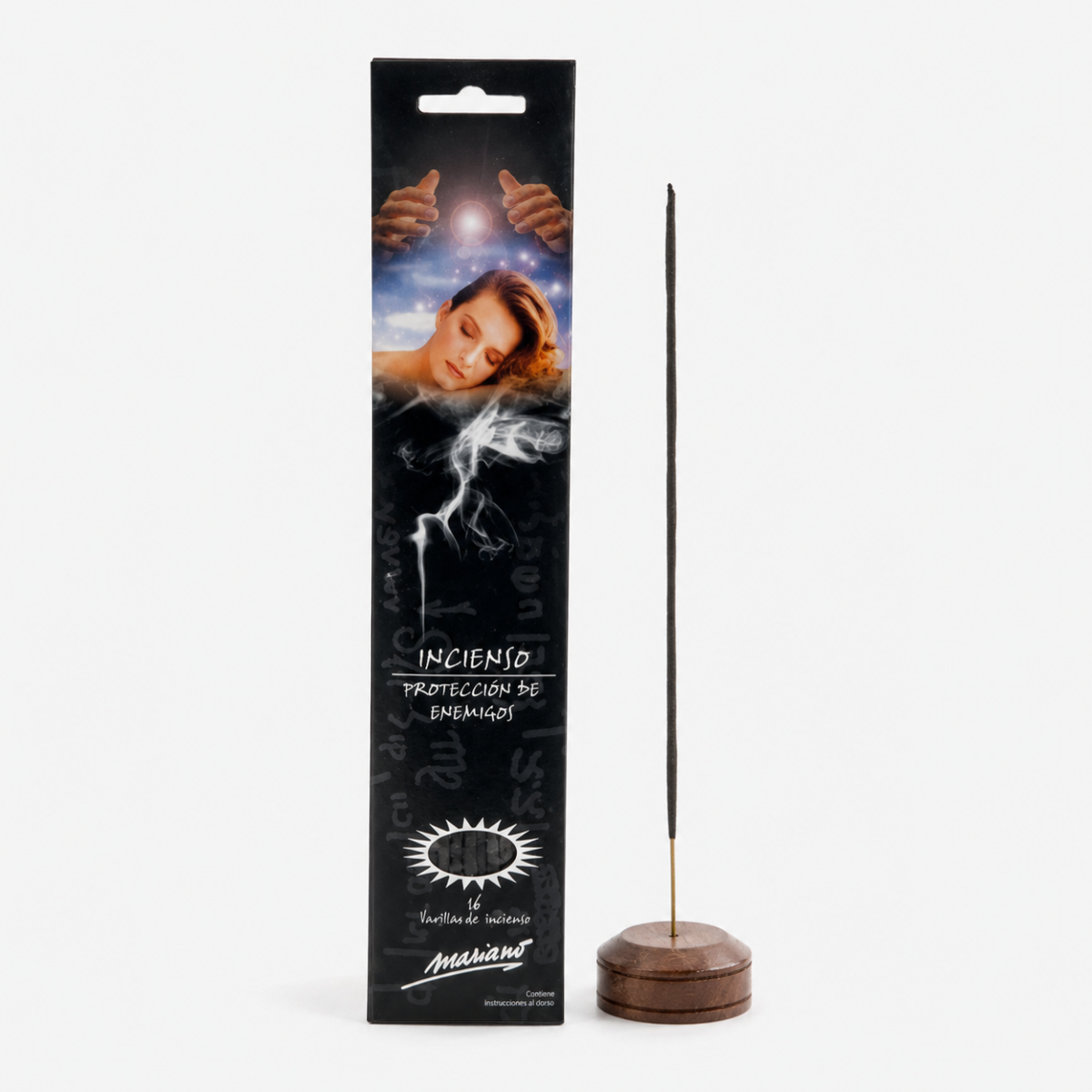
- Purify it: pass it three times through the smoke of a protection incense or palo santo.
- Charge it: light a Saint Benedict candle, hold the medal in your hands and say his prayer out loud.
- Keep it with you and repeat the cleansing during the waning moon, when it feels dull or after a difficult time.
If you are a believer, Catholic tradition asks for the medal to be blessed by a priest: you can take it to any parish.

Where to wear the Saint Benedict medal
- Around your neck, on a chain or pendant, so his protection is always with you.
- In your wallet or bag, especially if you sense envy at work.
- Behind your front door or on the door frame, so nothing bad comes in.
- In the car, hanging from the mirror or in the glovebox.
- In your business, by the till or the door.
Giving a Saint Benedict medal is a beautiful gesture: you are wishing that nothing bad will reach someone. And if your home feels heavy, combine it with an energy cleanse of your home.
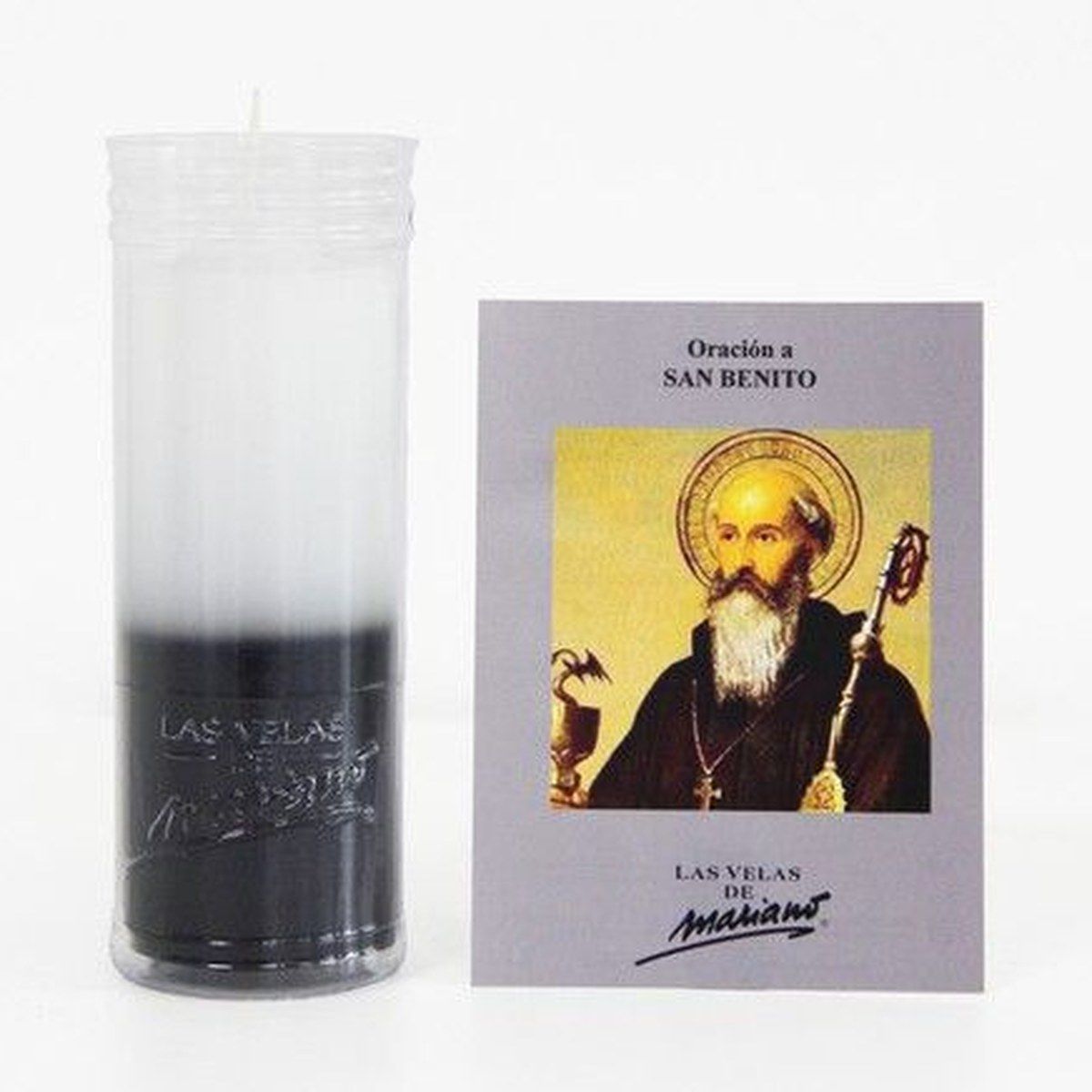
How to light a Saint Benedict candle
A Saint Benedict candle is lit to ask for protection, to cut ties with negativity or to keep envy away. You can light it on any day, although Saturday is traditionally preferred: it is the day of Saturn, the planet of protection and boundaries.
- Cleanse the space where you will light it and air the room for a few minutes.
- Write your request on a piece of paper: what or whom you want to protect.
- Light the candle with a wooden match, place the paper underneath and say the Saint Benedict prayer.
- Let it burn down without blowing it out. If you need to put it out, use a snuffer and light it again the next day.
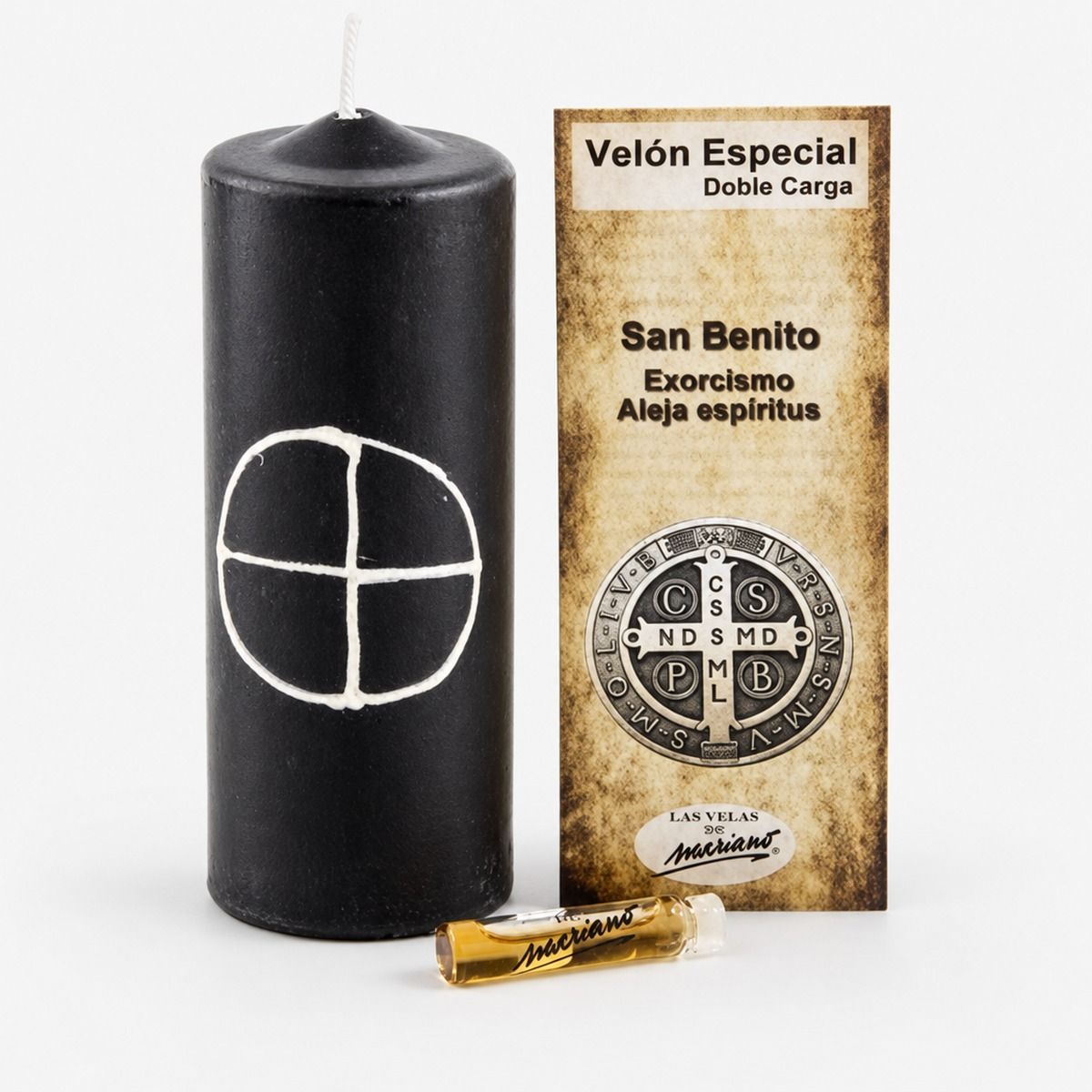
The Saint Benedict prayer candle is perfect for your daily prayer, and the Saint Benedict double-charge candle reinforces protection when you feel the attack is stronger.
Never leave a lit candle unattended, or near curtains, children or pets.
Saint Benedict FAQs
When is Saint Benedict’s feast day?
On 11 July. Until 1969 it was celebrated on 21 March, the day he died.
Are Saint Benedict and Benedict of Nursia the same person?
Yes: Benedict of Nursia, Saint Benedict the Abbot and Saint Benedict are the same saint, the founder of the Benedictines.
Who can wear the Saint Benedict medal?
Anyone who feels devotion to the saint or wants his protection, adults and children alike.
What should I do if my medal breaks?
Thank it for its protection, clean it and bury it in the earth or take it to a church. Then consecrate a new one.
How often should I cleanse it?
Once a month during the waning moon, or whenever it feels heavy.
More allies for your protection
To keep with you and complete your protection rituals with Saint Benedict:
Looking for more protection for your home? Discover what Florida water is used for too.
May Saint Benedict walk with you, and may his cross always be your light. ✨
Other related articles
 Oct. 9, 2026
Honey candle: meaning, what it is for and what it means when it drips
The honey candle is one of the best-loved candles for asking for … Oct. 5, 2026
The most powerful protection amulets and how to activate them
Which is the most powerful protection amulet? What protects you from the … Oct. 5, 2026
San Lotario and Other Rituals to Attract Good Luck in the Lottery
Meet San Lotario, learn when to light his ritual candle before the … Oct. 5, 2026
Transmutation Meaning: What Is Spiritual Transmutation?
To transmute is to turn one thing into another. Discover what spiritual … Oct. 4, 2026
Our customers trust us
Opinions of our clients
Receive our news