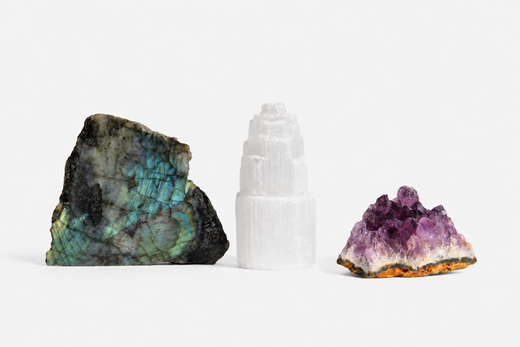
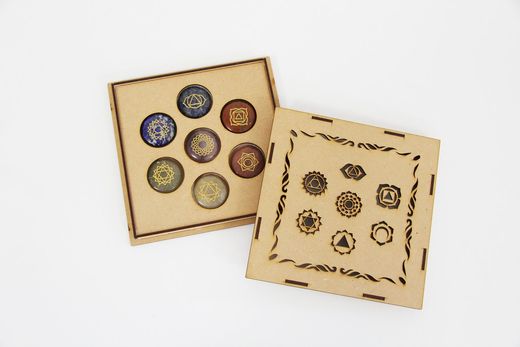
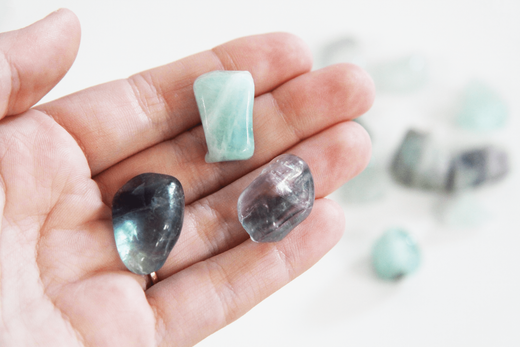
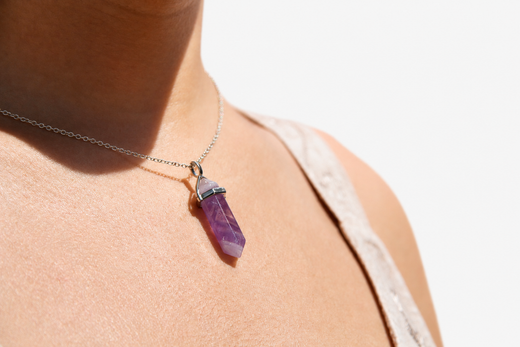
Blue kyanite is recognisable at once: it grows in blades, like leaves of a pearly blue. It is the stone tradition ties to the throat, to putting into words what you are carrying without it coming out crooked.
💎 What is blue kyanite?
Kyanite is an aluminium silicate that crystallises in elongated blades, and the blue variety is the most sought after: its shade runs from blue-grey to intense blue, with a pearly sheen on the faces. It is a fragile stone that splits into leaves and chips if knocked, so it is worth handling with care and not wetting.
✨ Attributed properties
In tradition it is the stone of communication above all, linked to the throat chakra. Not so much for talking more as for talking better.
- Ordering your thoughts before letting them out
- Saying what you mean, not what nerves make you say
- Holding a difficult conversation without it turning into an argument
- Untangling misunderstandings that have run for years
- Writing and negotiating with a clear head
🌙 The best time to work with it
It is best worked on a Full Moon🌕 or a Waxing Moon🌒. The full moon suits work on the mind and on speech, and the waxing moon helps when you want a conversation to open something new. Keep it near on the day you have to negotiate, write something that matters, or say what you have been holding back.
How to use it
Keep it near when you have to write, negotiate or talk to someone about something that matters. Being fragile, it is better left on the table than carried in a pocket. If you want it for one particular conversation, hold it for a moment and say the difficult sentence quietly: the idea is to rehearse it first. It goes well with a blue candle.
🤝 Pairs well with
With aquamarine, which works the same area and adds calm. With blue apatite if on top of communicating you need the motivation to do it. And with hawk's eye when it is a case of seeing clearly first and explaining it afterwards.
Frequently asked questions
Kyanite or blue kyanite? Is it the same?
Kyanite is the mineral and it exists in several colours, but when people say kyanite on its own they almost always mean the blue, the most common in the trade. This is the blue one.
Can kyanite get wet?
Better not. It splits into blades and water can work its way between them and separate them. Clean it with a dry cloth.
Is it normal for the leaves to be separated or chipped?
Yes. Kyanite grows that way, in blades, and in raw form it is usual to see the cleavage planes and the odd chipped edge. It is not a fault, it is how it crystallises.
📋 Specifications
| Presentation | 4 × 4 cm box |
| Type | Raw mineral, neither polished nor cut |
| Piece | Natural and unique: shape, size and shade vary from stone to stone |
🧼 Cleaning and care
Clean it with a dry cloth and handle it carefully: it splits into blades and can chip if knocked or forced.